

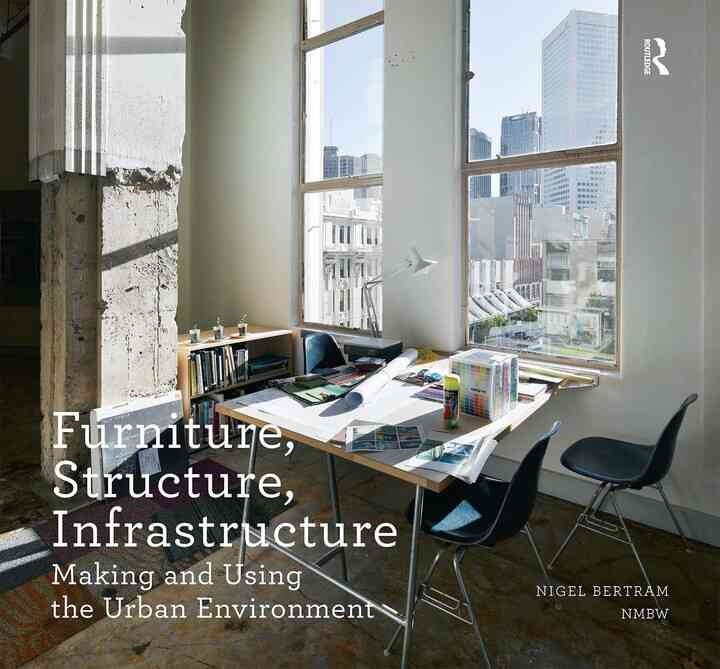
Furniture, Structure, Infrastructure: Making and Using the Urban Environment, 1st Edition eBook
$30.00
Observation and analysis are types of invention. They make things apparent which perhaps were invisible.
Digital edition, delivered to your inbox within 24 hours of payment. No shipping, no delivery charge.
About this eTextbook
Observation and analysis are types of invention. They make things apparent which perhaps were invisible. By noticing, drawing and naming something we bring it into being.
On the other hand, building and making can be thought of as analytical observations, pointing out what had not been so clear before and revealing the potential for other actions yet to occur. This book is a collection of urban research and architectural projects by award-winning architects Nigel Bertram / NMBW Architecture Studio, using observation as a design tool and design as an observational method. Through this process, a position on the making of architecture and on the role of architecture within the wider urban environment is established; embracing the full messy reality of the present, finding delight in the everyday and developing sensitivity to a range of found environments.
By taking pre-existing conditions seriously, each project, architectural or analytical, large or small, becomes understood as the strategic renovation of a continuing state. This method of working operates by thinking simultaneously at different scales, from furniture to structure and infrastructure, searching for combinations of what might normally be separated into different categories, moving between the many small and ad-hoc actions of individuals to wider systems of collective organisation. Thinking about the effects of small moves on the larger urban field (and vice-versa), the role of unplanned or uncontrolled events in relation to the inward focus of design; thinking about the combinatory effect of what is newly made with what is already there, for example, enables architecture and the city to be understood in relative terms - in terms of relationships.
Between people, groups of people, things, and parts of things, actions and groups of actions: urban architecture is the social arrangement of activity with the physical arrangement of large and small parts of its environment. But what people do also changes the place in which they do it. Considering different scales and types of relationships between individuals and groups, insiders and outsiders, expected and unexpected actions can be a way of crossing categories and establishing new relations.
Breaking down components of a given situation or brief, before re-grouping, can be used to flatten and redistribute hierarchies embedded within. Similarly, finding ways of carefully observing things just as they are in the present, helps to see around the presuppositions of familiarity, without worrying about cause or effect. These aims, techniques and thoughts are presented through the discipline of the architectural project, where precise strategies must in the end be found to define an exact physical arrangement and materiality, usually at minimum cost.
This collection of works researches the manner in which such precision can also generate openness and indeterminacy, allowing and provoking the engagement of others. ISBNs for Furniture, Structure, Infrastructure are 9781351935173, 1351935178 and the print ISBNs are 9781409449270, 1409449270. Additional ISBNs include 9781351935180, 9781315254814, 9781351935166, 9781138405486.
Publication details
- Author: Nigel Bertram
- Publisher: Routledge
What you receive
- A licensed digital edition of this title, supplied as PDF or EPUB. The format is set by the publisher, so email us the ISBN before ordering and we will confirm which one it is.
- Delivered to the email address on your order as a secure download link, usually within minutes and always within 24 hours of payment.
- Download links do not expire and there is no cap on re-downloads. Readable on any computer, tablet or phone, online or offline.
- This is a digital edition. Nothing is printed, packed or posted, and there is no delivery charge.
Delivery
Free on every order. This is a digital edition. Nothing is printed, packed or posted, so there is no delivery charge, no minimum order and no handling fee. The only thing added at checkout is 5% sales tax, shown on its own line before you confirm.
- Sent to the email address on your order, as a secure download link.
- Usually within a few minutes of payment clearing.
- Guaranteed within 24 hours, including weekends and holidays.
- Links do not expire and there is no cap on re-downloads.
- Delivered worldwide. No customs charge or import duty can arise.
Format. Titles are supplied as PDF or EPUB, set by the publisher. If the format matters to you, email us the eText ISBN before ordering and we will confirm which it is, normally the same business day.
Nothing arrived? Check your spam and promotions folders first. If it is not there 24 hours after payment, email us your order number and we will resend it. Full detail on the Delivery Policy.
Refunds
A digital file cannot be posted back, so there is no return process. There are situations that are refundable and situations that are not, and both are stated plainly.
Refunded in full, within 30 days of the order:
- The file is corrupt, truncated, or will not open in a reader that supports its format.
- Content is missing from the edition you were sold.
- The wrong title was delivered.
- The edition, eText ISBN, author or format does not match this page.
- You were charged twice for the same title.
- Nothing was delivered and we cannot reissue it.
Not downloaded yet? Cancel within 14 days for a full refund, no reason needed.
Not refundable: a title you downloaded and then decided you did not want, a file that does not suit your device where we did not say it would, buying the wrong edition when this page stated it correctly, and publisher printing or copy limits.
Approved refunds are issued within 2 to 5 business days to the card that paid. Full detail on the Returns & Refund Policy.
Payment
Checkout runs on Stripe. We accept Visa, Mastercard, American Express, Discover and JCB, credit or debit. That list is complete. No account is needed; guest checkout is available on every order.
What you are charged: the price on this page, plus 5% sales tax. Delivery is $0.00. There is no handling fee, no processing fee and no card surcharge. The order summary shows the full total before you confirm, and that figure is what leaves your account.
Nothing recurring. One charge per order. No subscription, no membership, no trial that converts, no saved-card auto-billing.
Security. Card numbers never reach us. Payment details are entered into fields hosted by Stripe, a PCI DSS Level 1 provider. We can see only the card brand, the last four digits and whether the payment succeeded. The whole site runs over HTTPS.
Prices are in US dollars. A card issued outside the United States is converted by your own bank at its own rate. Full detail on the Payment Policy.
About this eTextbook
Observation and analysis are types of invention. They make things apparent which perhaps were invisible. By noticing, drawing and naming something we bring it into being.
On the other hand, building and making can be thought of as analytical observations, pointing out what had not been so clear before and revealing the potential for other actions yet to occur. This book is a collection of urban research and architectural projects by award-winning architects Nigel Bertram / NMBW Architecture Studio, using observation as a design tool and design as an observational method. Through this process, a position on the making of architecture and on the role of architecture within the wider urban environment is established; embracing the full messy reality of the present, finding delight in the everyday and developing sensitivity to a range of found environments.
By taking pre-existing conditions seriously, each project, architectural or analytical, large or small, becomes understood as the strategic renovation of a continuing state. This method of working operates by thinking simultaneously at different scales, from furniture to structure and infrastructure, searching for combinations of what might normally be separated into different categories, moving between the many small and ad-hoc actions of individuals to wider systems of collective organisation. Thinking about the effects of small moves on the larger urban field (and vice-versa), the role of unplanned or uncontrolled events in relation to the inward focus of design; thinking about the combinatory effect of what is newly made with what is already there, for example, enables architecture and the city to be understood in relative terms – in terms of relationships.
Between people, groups of people, things, and parts of things, actions and groups of actions: urban architecture is the social arrangement of activity with the physical arrangement of large and small parts of its environment. But what people do also changes the place in which they do it. Considering different scales and types of relationships between individuals and groups, insiders and outsiders, expected and unexpected actions can be a way of crossing categories and establishing new relations.
Breaking down components of a given situation or brief, before re-grouping, can be used to flatten and redistribute hierarchies embedded within. Similarly, finding ways of carefully observing things just as they are in the present, helps to see around the presuppositions of familiarity, without worrying about cause or effect. These aims, techniques and thoughts are presented through the discipline of the architectural project, where precise strategies must in the end be found to define an exact physical arrangement and materiality, usually at minimum cost.
This collection of works researches the manner in which such precision can also generate openness and indeterminacy, allowing and provoking the engagement of others. ISBNs for Furniture, Structure, Infrastructure are 9781351935173, 1351935178 and the print ISBNs are 9781409449270, 1409449270. Additional ISBNs include 9781351935180, 9781315254814, 9781351935166, 9781138405486.
Publication details
- Author: Nigel Bertram
- Publisher: Routledge
What you receive
- A licensed digital edition of this title, supplied as PDF or EPUB. The format is set by the publisher, so email us the ISBN before ordering and we will confirm which one it is.
- Delivered to the email address on your order as a secure download link, usually within minutes and always within 24 hours of payment.
- Download links do not expire and there is no cap on re-downloads. Readable on any computer, tablet or phone, online or offline.
- This is a digital edition. Nothing is printed, packed or posted, and there is no delivery charge.
Related products
Featured Titles
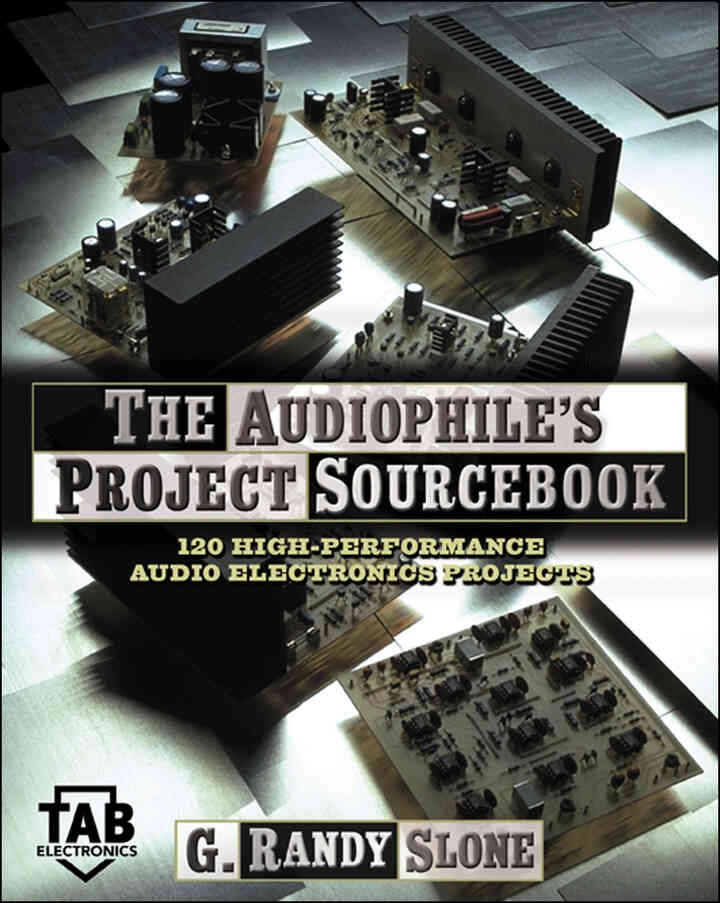
The Audiophile’s Project Sourcebook: 120 High-Performance Audio Electronics Projects eBook

Featured Titles

Featured Titles

Featured Titles
Featured Titles


Featured Titles