

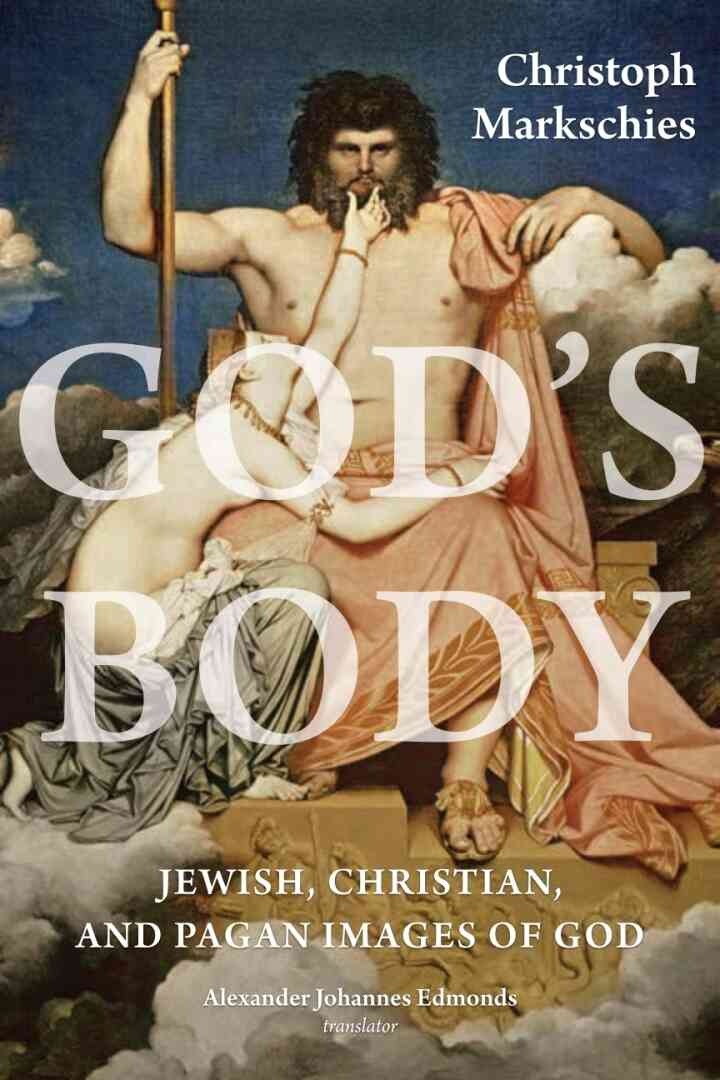
God’s Body: Jewish, Christian, and Pagan Images of God eBook
$30.00
While these two assertions are equally viable parts of Western Christian religious heritage, they stand in tension with one another.
Digital edition, delivered to your inbox within 24 hours of payment. No shipping, no delivery charge.
About this eTextbook
While these two assertions are equally viable parts of Western Christian religious heritage, they stand in tension with one another. Fearful of reducing God’s majesty with shallow anthropomorphisms, philosophy and religion affirm that God, as an eternal being, stands wholly apart from creation. Yet the legacy of the incarnation complicates this view of the incorporeal divine, affirming a very different image of God in physical embodiment.
While for many today the idea of an embodied God seems simplistic-even pedestrian-Christoph Markschies reveals that in antiquity, the educated and uneducated alike subscribed to this very idea. More surprisingly, the idea that God had a body was held by both polytheists and monotheists. Platonic misgivings about divine corporeality entered the church early on, but it was only with the advent of medieval scholasticism that the idea that God has a body became scandalous, an idea still lingering today.
In God’s Body Markschies traces the shape of the divine form in late antiquity. This exploration follows the development of ideas of God’s corporeality in Jewish and Greco-Roman traditions. In antiquity, gods were often like humans, which proved to be important for philosophical reflection and for worship.
Markschies considers how a cultic environment nurtured, and transformed, Jewish and Christian descriptions of the divine, as well as how philosophical debates over the connection of body and soul in humanity provided a conceptual framework for imagining God. Markschies probes the connections between this lively culture of religious practice and philosophical speculation and the christological formulations of the church to discover how the dichotomy of an incarnate God and a fleshless God came to be. By studying the religious and cultural past, Markschies reveals a Jewish and Christian heritage alien to modern sensibilities, as well as a God who is less alien to the human experience than much of Western thought has imagined.
Since the almighty God who made all creation has also lived in that creation, the biblical idea of humankind as image of God should be taken seriously and not restricted to the conceptual world but rather applied to the whole person.
Publication details
- Author: Christoph Markschies
- Publisher: Baylor University Press
- eText ISBN: 9781481311724, 1481311727
- Print ISBN: 9781481311687, 1481311689
What you receive
- A licensed digital edition of this title, supplied as PDF or EPUB. The format is set by the publisher, so email us the ISBN before ordering and we will confirm which one it is.
- Delivered to the email address on your order as a secure download link, usually within minutes and always within 24 hours of payment.
- Download links do not expire and there is no cap on re-downloads. Readable on any computer, tablet or phone, online or offline.
- This is a digital edition. Nothing is printed, packed or posted, and there is no delivery charge.
Delivery
Free on every order. This is a digital edition. Nothing is printed, packed or posted, so there is no delivery charge, no minimum order and no handling fee. The only thing added at checkout is 5% sales tax, shown on its own line before you confirm.
- Sent to the email address on your order, as a secure download link.
- Usually within a few minutes of payment clearing.
- Guaranteed within 24 hours, including weekends and holidays.
- Links do not expire and there is no cap on re-downloads.
- Delivered worldwide. No customs charge or import duty can arise.
Format. Titles are supplied as PDF or EPUB, set by the publisher. If the format matters to you, email us the eText ISBN before ordering and we will confirm which it is, normally the same business day.
Nothing arrived? Check your spam and promotions folders first. If it is not there 24 hours after payment, email us your order number and we will resend it. Full detail on the Delivery Policy.
Refunds
A digital file cannot be posted back, so there is no return process. There are situations that are refundable and situations that are not, and both are stated plainly.
Refunded in full, within 30 days of the order:
- The file is corrupt, truncated, or will not open in a reader that supports its format.
- Content is missing from the edition you were sold.
- The wrong title was delivered.
- The edition, eText ISBN, author or format does not match this page.
- You were charged twice for the same title.
- Nothing was delivered and we cannot reissue it.
Not downloaded yet? Cancel within 14 days for a full refund, no reason needed.
Not refundable: a title you downloaded and then decided you did not want, a file that does not suit your device where we did not say it would, buying the wrong edition when this page stated it correctly, and publisher printing or copy limits.
Approved refunds are issued within 2 to 5 business days to the card that paid. Full detail on the Returns & Refund Policy.
Payment
Checkout runs on Stripe. We accept Visa, Mastercard, American Express, Discover and JCB, credit or debit. That list is complete. No account is needed; guest checkout is available on every order.
What you are charged: the price on this page, plus 5% sales tax. Delivery is $0.00. There is no handling fee, no processing fee and no card surcharge. The order summary shows the full total before you confirm, and that figure is what leaves your account.
Nothing recurring. One charge per order. No subscription, no membership, no trial that converts, no saved-card auto-billing.
Security. Card numbers never reach us. Payment details are entered into fields hosted by Stripe, a PCI DSS Level 1 provider. We can see only the card brand, the last four digits and whether the payment succeeded. The whole site runs over HTTPS.
Prices are in US dollars. A card issued outside the United States is converted by your own bank at its own rate. Full detail on the Payment Policy.
About this eTextbook
While these two assertions are equally viable parts of Western Christian religious heritage, they stand in tension with one another. Fearful of reducing God’s majesty with shallow anthropomorphisms, philosophy and religion affirm that God, as an eternal being, stands wholly apart from creation. Yet the legacy of the incarnation complicates this view of the incorporeal divine, affirming a very different image of God in physical embodiment.
While for many today the idea of an embodied God seems simplistic-even pedestrian-Christoph Markschies reveals that in antiquity, the educated and uneducated alike subscribed to this very idea. More surprisingly, the idea that God had a body was held by both polytheists and monotheists. Platonic misgivings about divine corporeality entered the church early on, but it was only with the advent of medieval scholasticism that the idea that God has a body became scandalous, an idea still lingering today.
In God’s Body Markschies traces the shape of the divine form in late antiquity. This exploration follows the development of ideas of God’s corporeality in Jewish and Greco-Roman traditions. In antiquity, gods were often like humans, which proved to be important for philosophical reflection and for worship.
Markschies considers how a cultic environment nurtured, and transformed, Jewish and Christian descriptions of the divine, as well as how philosophical debates over the connection of body and soul in humanity provided a conceptual framework for imagining God. Markschies probes the connections between this lively culture of religious practice and philosophical speculation and the christological formulations of the church to discover how the dichotomy of an incarnate God and a fleshless God came to be. By studying the religious and cultural past, Markschies reveals a Jewish and Christian heritage alien to modern sensibilities, as well as a God who is less alien to the human experience than much of Western thought has imagined.
Since the almighty God who made all creation has also lived in that creation, the biblical idea of humankind as image of God should be taken seriously and not restricted to the conceptual world but rather applied to the whole person.
Publication details
- Author: Christoph Markschies
- Publisher: Baylor University Press
- eText ISBN: 9781481311724, 1481311727
- Print ISBN: 9781481311687, 1481311689
What you receive
- A licensed digital edition of this title, supplied as PDF or EPUB. The format is set by the publisher, so email us the ISBN before ordering and we will confirm which one it is.
- Delivered to the email address on your order as a secure download link, usually within minutes and always within 24 hours of payment.
- Download links do not expire and there is no cap on re-downloads. Readable on any computer, tablet or phone, online or offline.
- This is a digital edition. Nothing is printed, packed or posted, and there is no delivery charge.
Related products

Featured Titles

Featured Titles


Featured Titles

Featured Titles

Featured Titles

Featured Titles

Featured Titles