

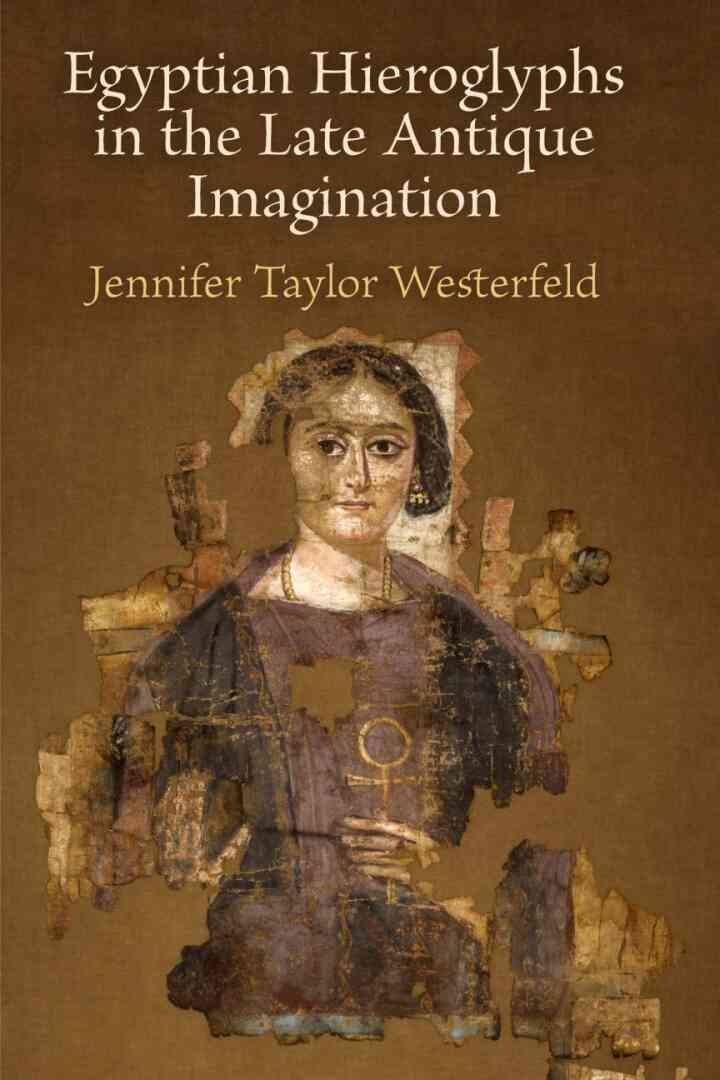
Egyptian Hieroglyphs in the Late Antique Imagination eBook
$30.00
. Throughout the pharaonic period, hieroglyphs served both practical and aesthetic purposes.
Digital edition, delivered to your inbox within 24 hours of payment. No shipping, no delivery charge.
About this eTextbook
. Throughout the pharaonic period, hieroglyphs served both practical and aesthetic purposes. Carved on stelae, statues, and temple walls, hieroglyphic inscriptions were one of the most prominent and distinctive features of ancient Egyptian visual culture.
For both the literate minority of Egyptians and the vast illiterate majority of the population, hieroglyphs possessed a potent symbolic value that went beyond their capacity to render language visible. For nearly three thousand years, the hieroglyphic script remained closely bound to indigenous notions of religious and cultural identity. By the late antique period, literacy in hieroglyphs had been almost entirely lost.
However, the monumental temples and tombs that marked the Egyptian landscape, together with the hieroglyphic inscriptions that adorned them, still stood as inescapable reminders that Christianity was a relatively new arrival to the ancient land of the pharaohs. In Egyptian Hieroglyphs in the Late Antique Imagination, Jennifer Westerfeld argues that depictions of hieroglyphic inscriptions in late antique Christian texts reflect the authors' attitudes toward Egypt's pharaonic past. Whether hieroglyphs were condemned as idolatrous images or valued as a source of mystical knowledge, control over the representation and interpretation of hieroglyphic texts constituted an important source of Christian authority.
Westerfeld examines the ways in which hieroglyphs are deployed in the works of Eusebius and Augustine, to debate biblical chronology; in Greek, Roman, and patristic sources, to claim that hieroglyphs encoded the mysteries of the Egyptian priesthood; and in a polemical sermon by the fifth-century monastic leader Shenoute of Atripe, to argue that hieroglyphs should be destroyed lest they promote a return to idolatry. She argues that, in the absence of any genuine understanding of hieroglyphic writing, late antique Christian authors were able to take this powerful symbol of Egyptian identity and manipulate it to serve their particular theological and ideological ends.
Publication details
- Author: Jennifer Taylor Westerfeld
- Publisher: University of Pennsylvania Press
- eText ISBN: 9780812296402, 0812296400
- Print ISBN: 9780812251579, 0812251571
What you receive
- A licensed digital edition of this title, supplied as PDF or EPUB. The format is set by the publisher, so email us the ISBN before ordering and we will confirm which one it is.
- Delivered to the email address on your order as a secure download link, usually within minutes and always within 24 hours of payment.
- Download links do not expire and there is no cap on re-downloads. Readable on any computer, tablet or phone, online or offline.
- This is a digital edition. Nothing is printed, packed or posted, and there is no delivery charge.
Delivery
Free on every order. This is a digital edition. Nothing is printed, packed or posted, so there is no delivery charge, no minimum order and no handling fee. The only thing added at checkout is 5% sales tax, shown on its own line before you confirm.
- Sent to the email address on your order, as a secure download link.
- Usually within a few minutes of payment clearing.
- Guaranteed within 24 hours, including weekends and holidays.
- Links do not expire and there is no cap on re-downloads.
- Delivered worldwide. No customs charge or import duty can arise.
Format. Titles are supplied as PDF or EPUB, set by the publisher. If the format matters to you, email us the eText ISBN before ordering and we will confirm which it is, normally the same business day.
Nothing arrived? Check your spam and promotions folders first. If it is not there 24 hours after payment, email us your order number and we will resend it. Full detail on the Delivery Policy.
Refunds
A digital file cannot be posted back, so there is no return process. There are situations that are refundable and situations that are not, and both are stated plainly.
Refunded in full, within 30 days of the order:
- The file is corrupt, truncated, or will not open in a reader that supports its format.
- Content is missing from the edition you were sold.
- The wrong title was delivered.
- The edition, eText ISBN, author or format does not match this page.
- You were charged twice for the same title.
- Nothing was delivered and we cannot reissue it.
Not downloaded yet? Cancel within 14 days for a full refund, no reason needed.
Not refundable: a title you downloaded and then decided you did not want, a file that does not suit your device where we did not say it would, buying the wrong edition when this page stated it correctly, and publisher printing or copy limits.
Approved refunds are issued within 2 to 5 business days to the card that paid. Full detail on the Returns & Refund Policy.
Payment
Checkout runs on Stripe. We accept Visa, Mastercard, American Express, Discover and JCB, credit or debit. That list is complete. No account is needed; guest checkout is available on every order.
What you are charged: the price on this page, plus 5% sales tax. Delivery is $0.00. There is no handling fee, no processing fee and no card surcharge. The order summary shows the full total before you confirm, and that figure is what leaves your account.
Nothing recurring. One charge per order. No subscription, no membership, no trial that converts, no saved-card auto-billing.
Security. Card numbers never reach us. Payment details are entered into fields hosted by Stripe, a PCI DSS Level 1 provider. We can see only the card brand, the last four digits and whether the payment succeeded. The whole site runs over HTTPS.
Prices are in US dollars. A card issued outside the United States is converted by your own bank at its own rate. Full detail on the Payment Policy.
About this eTextbook
. Throughout the pharaonic period, hieroglyphs served both practical and aesthetic purposes. Carved on stelae, statues, and temple walls, hieroglyphic inscriptions were one of the most prominent and distinctive features of ancient Egyptian visual culture.
For both the literate minority of Egyptians and the vast illiterate majority of the population, hieroglyphs possessed a potent symbolic value that went beyond their capacity to render language visible. For nearly three thousand years, the hieroglyphic script remained closely bound to indigenous notions of religious and cultural identity. By the late antique period, literacy in hieroglyphs had been almost entirely lost.
However, the monumental temples and tombs that marked the Egyptian landscape, together with the hieroglyphic inscriptions that adorned them, still stood as inescapable reminders that Christianity was a relatively new arrival to the ancient land of the pharaohs. In Egyptian Hieroglyphs in the Late Antique Imagination, Jennifer Westerfeld argues that depictions of hieroglyphic inscriptions in late antique Christian texts reflect the authors’ attitudes toward Egypt’s pharaonic past. Whether hieroglyphs were condemned as idolatrous images or valued as a source of mystical knowledge, control over the representation and interpretation of hieroglyphic texts constituted an important source of Christian authority.
Westerfeld examines the ways in which hieroglyphs are deployed in the works of Eusebius and Augustine, to debate biblical chronology; in Greek, Roman, and patristic sources, to claim that hieroglyphs encoded the mysteries of the Egyptian priesthood; and in a polemical sermon by the fifth-century monastic leader Shenoute of Atripe, to argue that hieroglyphs should be destroyed lest they promote a return to idolatry. She argues that, in the absence of any genuine understanding of hieroglyphic writing, late antique Christian authors were able to take this powerful symbol of Egyptian identity and manipulate it to serve their particular theological and ideological ends.
Publication details
- Author: Jennifer Taylor Westerfeld
- Publisher: University of Pennsylvania Press
- eText ISBN: 9780812296402, 0812296400
- Print ISBN: 9780812251579, 0812251571
What you receive
- A licensed digital edition of this title, supplied as PDF or EPUB. The format is set by the publisher, so email us the ISBN before ordering and we will confirm which one it is.
- Delivered to the email address on your order as a secure download link, usually within minutes and always within 24 hours of payment.
- Download links do not expire and there is no cap on re-downloads. Readable on any computer, tablet or phone, online or offline.
- This is a digital edition. Nothing is printed, packed or posted, and there is no delivery charge.
Related products

Featured Titles



Featured Titles

Featured Titles

Featured Titles

Featured Titles

Featured Titles